Square Edge vs Tegular Ceiling Tiles: Which Edge Should You Choose?
News 2026-09-15
Square-edge ceiling tiles offer a straightforward exposed-grid appearance. Tegular ceiling tiles have a rebated edge that typically positions the panel face below the grid, creating a stepped reveal. Choose between them by comparing the desired finish, compatible suspension system, installation details, and replacement requirements.
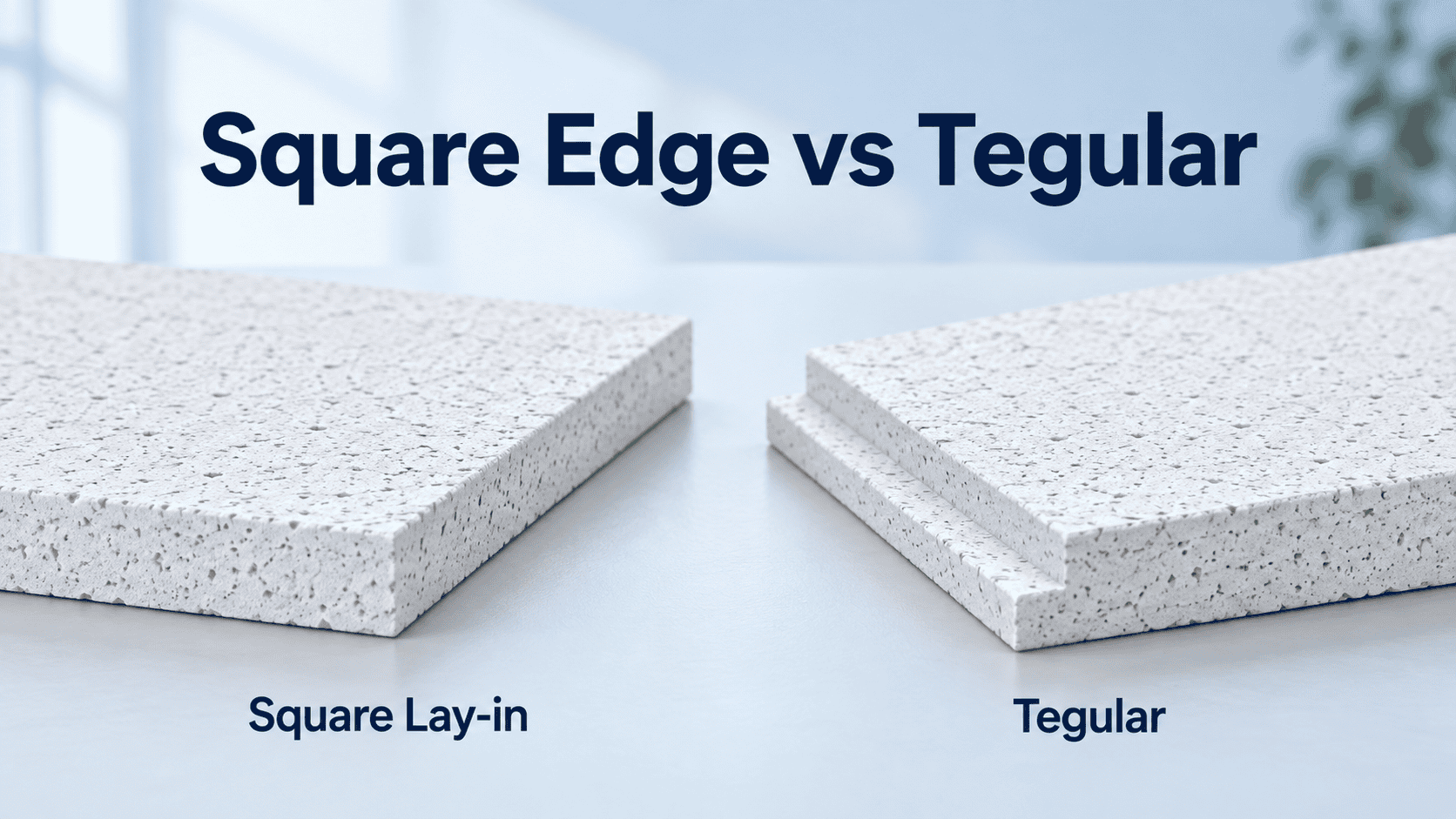
In this guide, “square edge” means square lay-in, not square tegular. These names can sound similar, so always check the edge drawing. Neither edge type alone establishes better acoustics, moisture resistance, or fire performance.
What Is a Square-Edge Ceiling Tile?
A square lay-in tile has a straight perimeter without a tegular rebate. It rests on the supporting flanges of a compatible exposed T-grid. The visible grid forms a clear pattern around the panels.
This option suits projects that prefer a simple ceiling finish and straightforward replacement planning. Offices, classrooms, and commercial interiors can all use square-edge panels when the selected product meets the project requirements.
What Is a Tegular Ceiling Tile?
A tegular tile has a stepped or rebated perimeter. In a typical installation, the supporting edge sits on the grid while the main panel face projects below it. The resulting shadow line adds depth and makes the grid less visually dominant.
Tegular does not mean fully concealed grid. Profiles can differ in rebate depth, shape, and compatible suspension width. Specify the exact detail rather than relying on the word “tegular.”
Square Edge vs Tegular: Comparison Table
| Selection factor | Square lay-in | Tegular |
|---|---|---|
| Edge shape | Straight, unrebated perimeter | Stepped or rebated perimeter |
| Typical appearance | Clearly expressed exposed grid | Panel face below grid with a reveal |
| Grid selection | Confirm approved panel and grid combination | Confirm grid width and exact rebate geometry |
| Border detailing | Check perimeter support and cutting instructions | Check how cut borders maintain the intended finish |
| Maintenance access | Usually removable in accessible lay-in systems | Usually removable; check clearance and edge protection |
| Cost comparison | Request a project-specific installed quote | Include any additional border detailing in the quote |
| Performance | Verify the selected product’s test data | Verify the selected product’s test data |
Which Edge Fits Your Project?
Choose square lay-in when a simple grid appearance is the priority. It is worth considering for repeatable layouts and replacement programs where matching existing panels matters more than adding a shadow-line effect.
Choose tegular when ceiling depth and detail are priorities. Reception areas, meeting rooms, and customer-facing spaces may benefit from the stepped appearance. Review a physical sample under the intended lighting before approving the finish.
Avoid assuming that tegular is always more expensive or that square edge always installs faster. Compare equivalent panel specifications, quantities, border conditions, and local labor costs. A quotation should distinguish material supply from installation work.
Check Grid Compatibility Before Ordering
The same nominal tile size does not guarantee interchangeability. Confirm actual panel dimensions, thickness, grid module, exposed flange width, and the manufacturer’s edge code.
Tegular profiles are available for different suspension widths. Request a section drawing showing how your selected panel rests on its specified grid.
Before a bulk order, approve a sample in the intended system. Check insertion, support, alignment, removal, and the interface with lights and perimeter trims. Do not force a replacement panel into a grid simply because its face dimensions look correct.
For replacement projects, keep a spare panel and its product information after installation. A photograph of the ceiling face may not reveal the rebate accurately. Recording the edge profile now makes future maintenance inquiries clearer and helps avoid ordering mismatched replacements.
Keep Appearance and Performance Separate
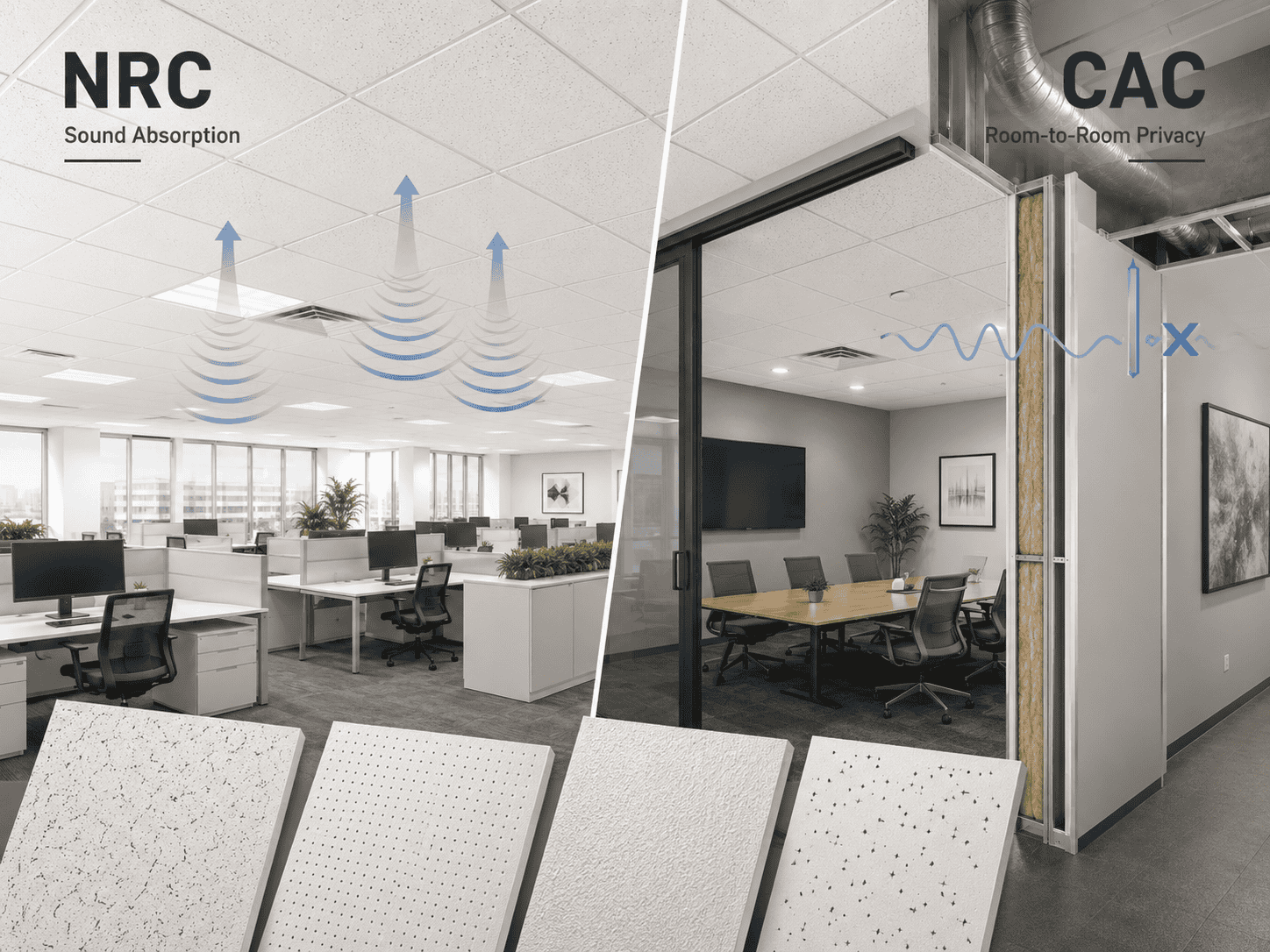
For acoustic selection, compare the specified product’s NRC and CAC results rather than its edge name. Read our NRC vs CAC guide for the broader sound-control decision.
For material and purchasing considerations, see our commercial ceiling tile buyer’s guide. When requesting Ceilmart mineral fiber ceiling tiles, include your edge preference, grid details, dimensions, quantity, and project requirements so the quotation can identify the intended configuration.
FAQ
Does “square edge” mean the same as “square tegular”?
No. Square lay-in has an unrebated perimeter. Square tegular is a tegular profile with a square stepped detail. Ask for a drawing whenever the terminology is unclear.
Can tegular tiles replace square-edge tiles in an existing grid?
Sometimes, but only after checking the approved grid, dimensions, edge geometry, and service interfaces. Trial-fit a sample before ordering replacements for the entire ceiling.
Are tegular ceiling tiles better for sound absorption?
Not necessarily. The edge label alone cannot establish acoustic performance. Compare tested ratings for the exact products and installation configurations being considered.
Can tegular tiles be cut at room borders?
Many mineral fiber products allow field cutting, but the perimeter may need a recreated rebate or another approved detail. Follow the selected manufacturer’s cutting and finishing instructions.